The Case for a Slower Home
Why the most inviting spaces aren’t always the most finished—and what our homes might gain when we stop treating them as projects.
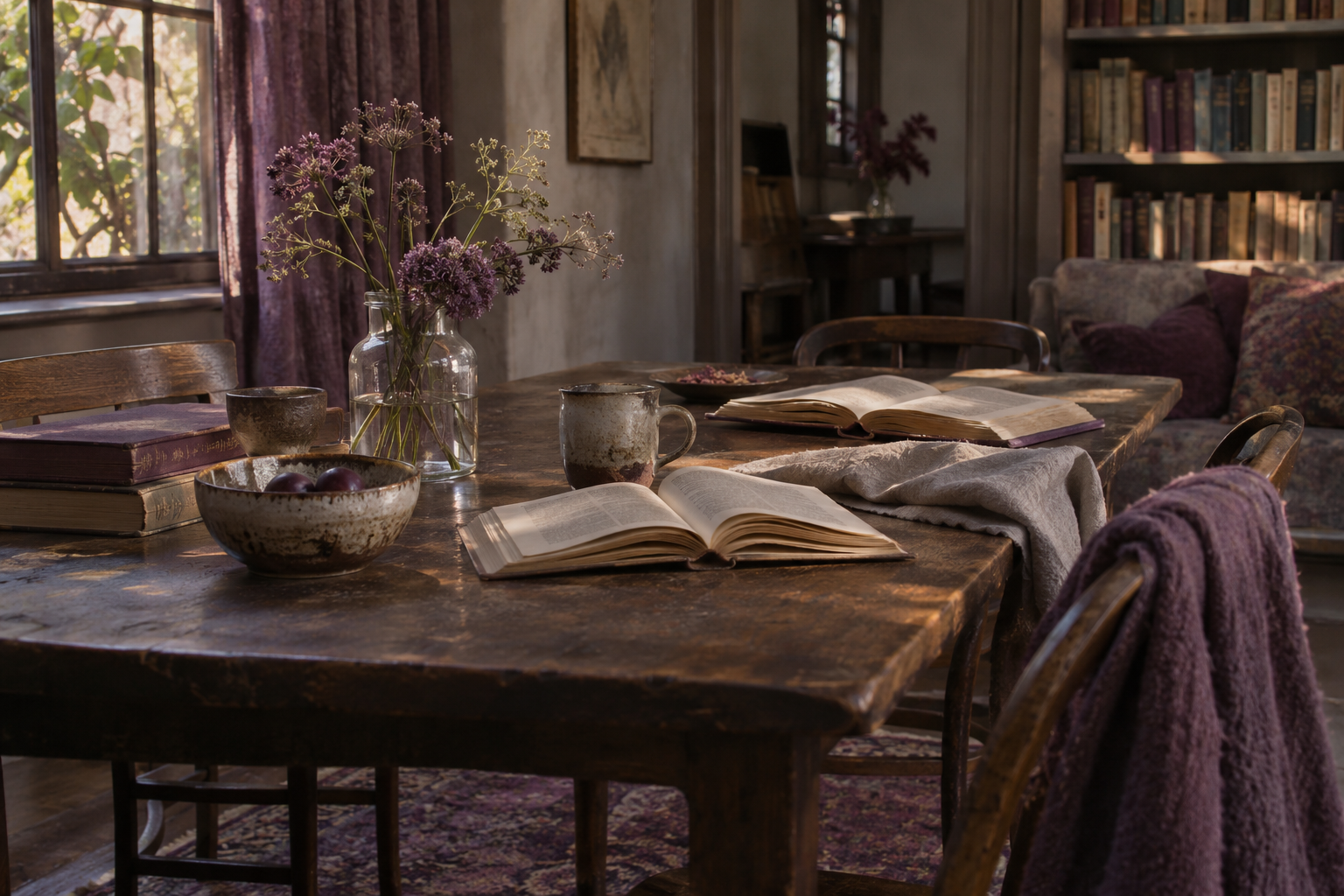
There is a curious moment in the life of a room when it begins to look finished but has not yet learned how to be lived in.
The sofa is in place. The books have been arranged. A vase occupies the corner of a table with the confidence of something that has always belonged there.
And yet, the room is still waiting.
Perhaps what makes a home feel complete has less to do with what we’ve put into it than with what has happened there.
We live in an age of beautifully documented interiors. There are rooms photographed before their owners have spent a single evening in them, renovations compressed into satisfying before-and-after sequences, and seemingly endless opportunities to discover that our perfectly serviceable kitchens are apparently missing something essential.
Usually a different kitchen.
There is pleasure in all of this. Beautiful rooms can inspire us. A well-considered renovation can make everyday life easier. And there is nothing particularly noble about living indefinitely with a broken cabinet to demonstrate one’s independence from decorating trends.
But somewhere between inspiration and aspiration, an interesting assumption can take hold: that a home should arrive at a finished state, preferably sooner rather than later.
What if we allowed it to take longer?
The Seduction of the Finished Room
A finished room is compelling.
Everything appears to belong. The colors agree with one another. The lighting is flattering. There are no cables to untangle, no unopened packages near the door, no inexplicable collection of objects waiting to be returned to the garage.
It is easy to admire a space in which every decision seems resolved.
But a photograph is unusually good at concealing the passage of time.
It cannot tell us whether the chair beside the window is actually comfortable, whether the dining table is used for family dinners or mostly for sorting mail, or whether the beautifully styled guest room is the place where everyone prefers to sit.
Nor can it show the decisions that haven’t been made yet.
A home photographed for an audience has a particular purpose: to be seen. A home inhabited by people has a considerably more complicated assignment.
It must accommodate the ordinary unpredictability inherent in life.
Someone needs a place to leave their keys. Someone else wants to read where the light is better. A child develops an unexpected enthusiasm for making elaborate structures on the living-room floor. A dog decides that the expensive bed purchased specifically for him is unacceptable, while the old blanket beside the sofa is apparently perfect.
These things are rarely part of the original design.
They are, however, part of the home.
The distinction isn’t between good design and bad design. It is between a room considered as a completed composition and a room understood as a setting for an unfolding life.
The two can exist together. But they aren’t always the same thing.
What Makes a Place Ours?
Environmental psychologists have spent decades examining why people form emotional connections to particular places.
Place attachment is a real thing. Environmental psychologists Leila Scannell and Robert Gifford proposed a framework that organizes it around three dimensions: people, psychological processes, and place. It is a conceptual framework, not a study of one group of homeowners.
In other words, our relationship with a place is not simply a response to its appearance.
Memory, emotion, behavior, personal identity, and social relationships may all be involved.
A house can be architecturally beautiful without feeling familiar. An ordinary apartment can hold a remarkable amount of meaning.
Consider the kitchen in which a family gathers every holiday, or the chair someone returns to after a difficult day. Neither necessarily possesses any special design distinction. Their significance may come from repetition, association, and the people connected to them.
This doesn’t mean beauty is irrelevant. Physical surroundings matter, and thoughtful design can contribute to comfort, privacy, and how people use space.
But the meaning of home is larger than its furnishings.
Sociologist Shelley Mallett’s review of home research shows how difficult the concept is to contain in a single definition. Home may be understood as a place, a feeling, a set of relationships, a refuge, or something we continually create.
It is not even necessarily a house.
For some people, home is a rented apartment. For others, it is a room shared with family, a temporary residence, or a place they cannot currently return to.
The freedom to improve or personalize a dwelling is also unevenly distributed. Money, housing security, accessibility, time, and the rules of ownership or tenancy shape what people can change.
So perhaps the more interesting question isn’t whether a room is complete.
It’s whether the people living there have been able to make a place for themselves.
The Things That Arrive With Us
Every home contains objects whose value is difficult to explain to anyone else.
A chipped serving bowl that belonged to a grandmother. A framed photograph taken on a thoroughly unremarkable afternoon. A table bought secondhand that has survived several moves and an astonishing number of dinners.
These objects may not coordinate particularly well.
They may even be the reason a room refuses to look like the picture that inspired it.
Yet they carry something a newly purchased replacement cannot immediately supply: a history.
This is one reason the idea of a perfectly coordinated home can feel strangely limiting. Not because coordination is undesirable, but because a life seldom arrives as a matching set.
Our belongings come from different periods. Some represent people we love. Others belong to earlier versions of ourselves. A few remain because they are useful, and a few because we have never quite decided what to do with them.
Not everything deserves permanent residence, of course.
A house can become difficult to enjoy when possessions accumulate beyond what its inhabitants can comfortably manage. A study of 60 dual-income spouses found that descriptions of clutter and an unfinished home were associated with some women’s daily mood and cortisol patterns over three weekdays. It was correlational: it did not test whether slower decorating improves well-being.
The aim is not to preserve every object or celebrate disorder as authenticity.
It is to recognize that choosing what stays can be as meaningful as choosing what comes in.
Sometimes the most personal room is not the one filled with the most things. It is the one in which the things that remain have been given enough space to matter.
The Quiet Work of Belonging
A room may change surprisingly little in appearance while becoming much more familiar to the person who lives there.
The first cup of coffee made in an unfamiliar kitchen is different from the hundredth.
At first, you have to remember which drawer holds the spoons. Eventually, your hand reaches for them without asking.
You learn which window catches the morning light, which floorboard announces someone’s arrival, and where everyone seems to gather even when there are perfectly good chairs elsewhere.
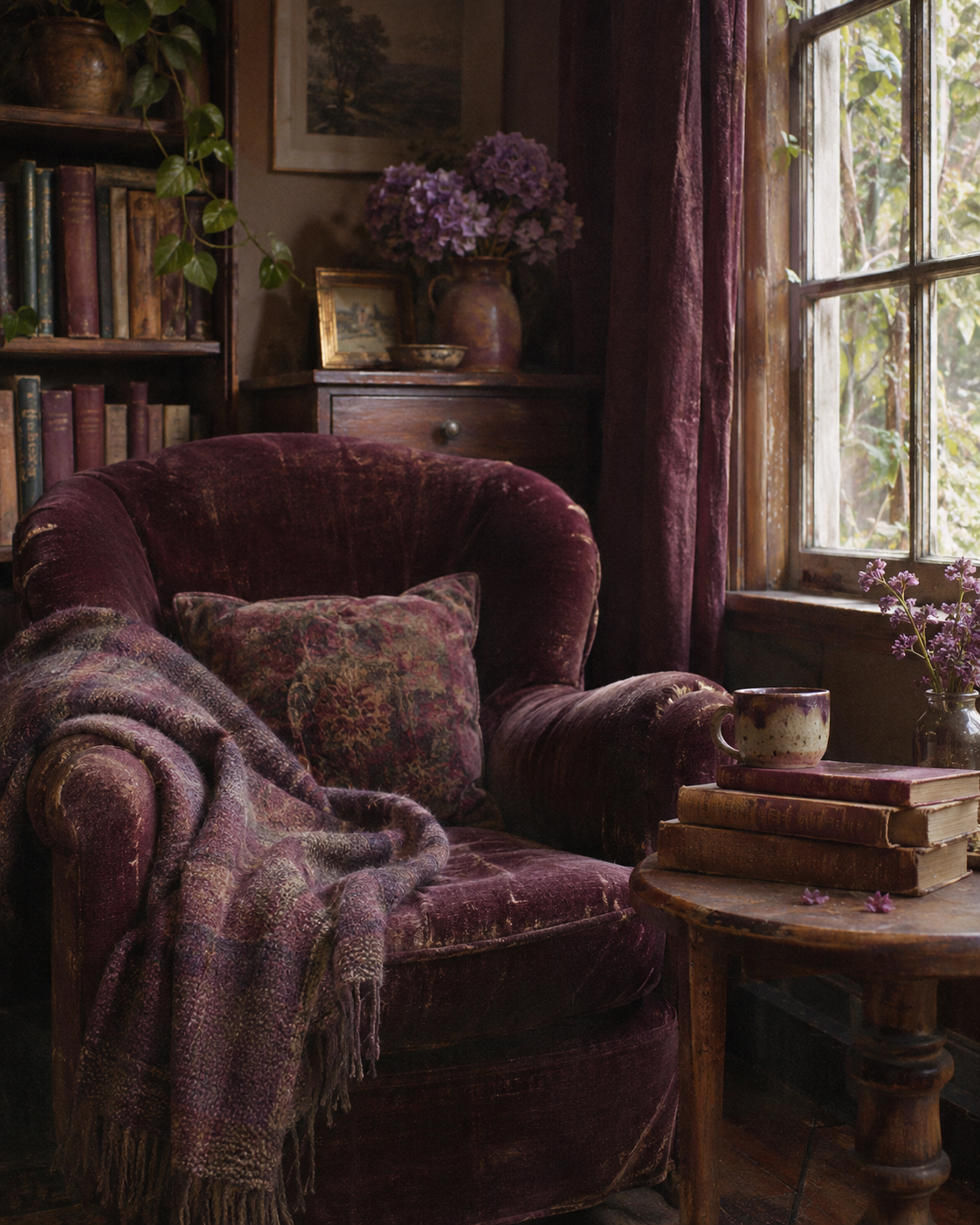
These are small discoveries. Together, they form an intimate understanding of a place.
Researcher Maya Willecke’s qualitative study used interviews with temporary residents in Frankfurt am Main and Leipzig to explore how everyday activities, social relationships, and familiar places contribute to a sense of home without an expectation of permanence.
The findings complicate the idea that belonging must wait for ownership, long residence, or a completed interior.
Home can be something people actively make through living.
Katariina Kotila’s 2026 study followed Finnish young adults aged 18–23 who had recently moved out of their childhood homes to begin higher-education studies in another town. Using solicited video or written diaries and interviews, it explores how decorating, relaxing, and managing household responsibilities contribute to making a place feel like one’s own.
These studies examine particular populations and experiences. They don’t establish a universal formula for feeling at home.
But they draw attention to something easily overlooked when we focus on interiors as visual projects: domestic life is made of actions as well as objects.
Cooking a familiar meal. Finding a place for a favorite book. Making room for a visitor. Learning how a household moves through its day.
A home acquires meaning through use.
And use takes time.
When a Home Needs to Change
There is a danger in romanticizing the unfinished home.
Not everyone has the luxury of waiting.
A family may need another bedroom. A person with limited mobility may require an accessible bathroom. A failing heating system or persistent leak is not an invitation to practice patience.
Sometimes the most loving thing we can do for a home, and for the people living in it, is to change it promptly.
The argument for a slower home is not an argument against repairs, renovations, or the pleasure of beautiful things.
It is an argument for distinguishing between changes that improve our lives and changes that merely make a space appear more complete.
The distinction can be surprisingly difficult.
A room might be inconvenient because the furniture is arranged poorly. Or because the household’s needs have changed. Or because we are trying to make it perform a function it was never suited to.
Buying something new may solve the problem.
Living with the room for another month may reveal a better solution.
And sometimes, after all that consideration, the answer really is a different sofa.
There is no prize for refusing to buy it.
What matters is allowing the decision to emerge from the life taking place in the room, rather than assuming the room must be finished before that life can properly begin.
A Home That Can Change Its Mind
Perhaps one of the most generous qualities a home can possess is the ability to accommodate change.
The room that once held a crib becomes a study. A dining table grows crowded with school projects, then years later becomes a place for long, quiet breakfasts. A guest bedroom turns into a studio. A garden changes because the person tending it has changed.
These transformations are not necessarily signs that the original design failed.
They may be evidence that the home is doing its job.
A home designed around a single, fixed image of the people who live there can become difficult to inhabit when those people grow into different lives.
The alternative isn’t to avoid making decisions.
It is to leave room for revision.
Choose things you genuinely enjoy. Repair what needs repairing. Make the spaces functional and welcoming. Pay attention to how you live rather than only how you imagined you would.
And allow some questions to remain unanswered.
The empty corner may eventually become a reading nook. It may hold a plant, a desk, or nothing at all. The room may turn out to need less furniture, not more.
There is a particular freedom in discovering that every space does not require an immediate purpose.
The Beauty of an Unfinished Life
We often refer to a home as though it were a project with a final inspection.
There is a beginning, a series of decisions, and somewhere in the distance, a satisfying moment when everything is done.
But homes have a way of resisting that narrative.
The people inside them change. Their tastes change. Their circumstances change. The objects they love acquire new meanings, and rooms that once made perfect sense need to be reconsidered.
Perhaps that is not a problem to solve.
Perhaps it is one of the things that makes a home worth having.
The rooms we remember most fondly are not always the most beautiful ones we have occupied. They may be the places where someone stayed late talking, where a holiday meal went slightly wrong, where an ordinary morning became unexpectedly memorable.
A photograph might capture the room.
It would have a harder time capturing why it mattered.
So by all means, choose the paint color. Hang the artwork. Find the lamp that makes the corner feel right.
But don’t wait for the last picture to be hung before having someone over.
Don’t postpone a favorite ritual until the kitchen is finished.
And don’t mistake an unfinished room for an unfinished life.
A home is allowed to become itself slowly.
So are the people who live there.
Sources & further reading
- Scannell, L., & Gifford, R. (2010). Defining place attachment: A tripartite organizing framework. Journal of Environmental Psychology, 30(1), 1–10.
- Mallett, S. (2004). Understanding home: A critical review of the literature. The Sociological Review, 52(1), 62–89.
- Saxbe, D. E., & Repetti, R. (2010). No place like home: Home tours correlate with daily patterns of mood and cortisol. Personality and Social Psychology Bulletin, 36(1), 71–81.
- Willecke, M. (2025). Practices of homing: How people with temporary living arrangements create home(s) through practices. Housing, Theory and Society, 42(3), 255–272.
- Kotila, K. (2026). (Re)creating one’s own place: Young adults’ affective home-making practices after moving out of the childhood home. Journal of Cultural Geography, 43(2), 240–262.